One diesel air heater can supply two warm-air outlets when its approved duct layout allows it. A Y-piece creates the branch, but it does not give each outlet half the airflow. The ducts, fittings and vents along each route determine how the air is distributed.
A second outlet may serve a sleeping area in a campervan or another cabin on a boat. Before choosing the connector, work out how both routes will fit and which outlet settings the heater permits. This guide covers cabin-heating air; combustion-air intake and exhaust pipes are separate circuits.
Draw the Common Run and Both Outlet Routes
Start with a simple sketch showing the heater, the junction and the two vents. The common run is the duct between the heater and the junction. It carries air for both outlets. Label the sections after the junction as Branch A and Branch B so their dimensions stay clear throughout the order. Decide how much heat each space needs before aiming for equal airflow at the two vents.
Mark the heater's specified outlet connection and the required initial duct arrangement. Then trace each branch through the available space, including turns around cabinets, seat frames or bulkheads. Put the vents where bedding and stored equipment will not block them.
A connector described as a “90mm Y-piece” may not have three identical connections. Record the inlet and both outlet sizes from its drawing, along with the intended direction of airflow. The number printed in a product title is not enough to prepare a three-connection assembly.
Why One Outlet Gets More Air
Two branches with the same nominal diameter can have different resistance. A short run with a gentle curve presents a different path from a longer run with several bends and a restrictive grille. The lower-resistance branch will generally receive more air.
This is why cutting two equal lengths of hose does not guarantee equal delivery. Fittings and terminal vents count too. A flattened section behind a cabinet can affect the result even when the visible connections look correct.
For an existing installation, inspect the weaker branch for crushed ducting, abrupt turns, loose joints and an obstructed outlet. Compare the two outlets at the same heater setting and with the vents in their intended operating positions. Air temperature and airflow are separate measurements; a hand held in front of a vent cannot reliably tell them apart.
Where balancing is needed, use the adjustment method permitted for the heater and vent arrangement. Squeezing a hose or partly blocking a fixed outlet introduces an uncontrolled restriction. A useful installation record identifies the permitted vent positions, so the system can be checked in the same condition later.
Choosing a Y-Piece or T-Piece
A Y-piece can let two branches leave the junction at gentler angles. A T-piece may suit a route that continues along a wall with a separate side outlet. Compare the complete routes each fitting creates, including any extra bends needed to reach the vents.
A smaller fitting may fit the available space but leave too little room for the hose to turn. Compare the fitting's internal shape, flow direction and published resistance data where available. Use components intended for the heater's warm-air temperature and approved duct arrangement.
For a slip-over hose connection, the mating spigot and the duct bore must fit together without crushing or stretching the duct end. The existing heater ducting ID and OD guide explains how to record those measurements before ordering.
Can You Reduce 90mm Heater Ducting to 75mm or 60mm?
Only where the heater's specified layout permits that reduction. Reducing the common run affects the air supplied to both outlets. Using a smaller branch after an approved junction is a different arrangement. A 90mm to 75mm duct reducer or a 90mm to 60mm duct reducer solves the connection between two diameters; its availability does not establish that the heater can operate with the resulting restriction.
The size change is larger than the diameter figures alone suggest. Circular duct area depends on the square of the internal diameter:
| Duct arrangement | Area, approximately | Relative to one 90mm duct |
|---|---|---|
| One 90mm duct | 6,362 mm² | 100% |
| One 75mm duct | 4,418 mm² | 69.4% |
| One 60mm duct | 2,827 mm² | 44.4% |
| Two 60mm ducts | 5,655 mm² combined | 88.9% |
| Two 75mm ducts | 8,836 mm² combined | 138.9% |
These figures compare geometry only. They use A = πd²/4 and assume the stated dimensions are the actual internal bores. They are not airflow percentages or approved installation combinations.
Two 60mm ducts have less combined area than one 90mm duct. Two 75mm ducts have more, but that still leaves the junction, bends, duct walls and vents to assess. Adding the areas cannot establish the pressure loss or the delivered airflow of the completed system.
Use the ducting limits for the exact heater model and outlet configuration. A nominal power description such as “5kW diesel heater” is not enough to select a reducer or approve a branched layout.
Decide Which Outlets Can Close
Closing one branch changes the air path available to the heater. Where the installation instructions require a permanently open route, that route must retain the specified duct and outlet arrangement. Leaving a small opening elsewhere does not establish adequate airflow.
Distinguish a directional vent from a closable vent on the parts list. A grille that swivels to aim the air may remain open, while another design can shut the passage completely. That difference matters when someone adjusts the outlet after installation.
The system assessment needs to cover the vent positions allowed during use. Follow the heater manufacturer's method for evaluating the heating-air inlet, common duct, branches and terminal components. Component ratings from one supplier or heater family should not be assigned to different parts without supporting data.
Separate Weak Airflow from Heat Loss Along the Route
A distant vent may deliver less air, cooler air, or both. If airflow is weak, investigate the route and its restrictions. If the air loses heat while passing through an unheated locker or service space, insulation may be relevant.
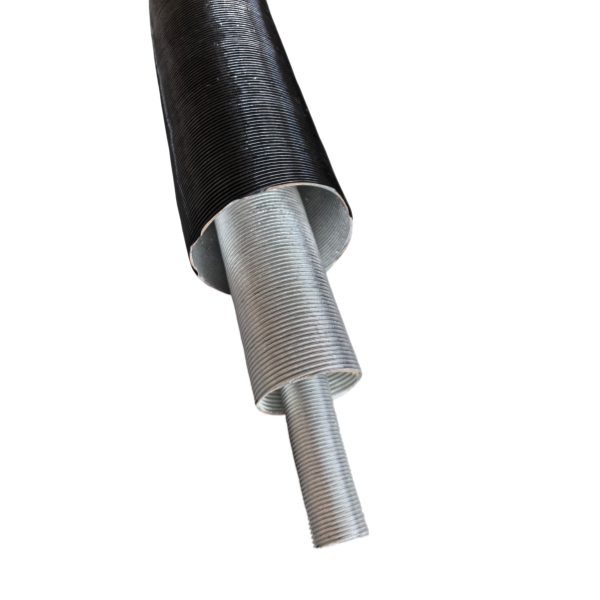
For a route requiring insulation, BSTFLEX offers Warm Air Duct Hose with Foam Insulation, with a PAK inner duct and an EPDM outer sleeve. Specify the required bore, overall outside diameter and service conditions when selecting it. The added outer layer also needs space around bends and through openings.
Insulation can reduce heat transfer through the duct wall. It does not remove the resistance of a restrictive fitting or restore the opening of a crushed hose.
Turn the Layout into a Ducting Order
For an OEM heater kit, give each duct section its own drawing reference. An order for “three metres of heater hose” leaves the supplier guessing about the pieces, end connections and material. A short section schedule is easier to quote and repeat:
| Section | Dimensions and connections | Route details |
|---|---|---|
| Common run | Specified bore, cut length, heater connection and junction inlet | Initial route, bends and clearance around the duct |
| Branch A | Branch bore, cut length, junction outlet and vent connection | Destination, insulation requirement and permitted vent positions |
| Branch B | Branch bore, cut length, junction outlet and vent connection | Destination, insulation requirement and permitted vent positions |
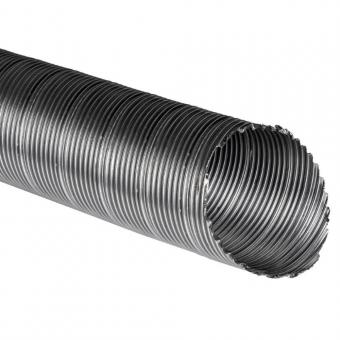
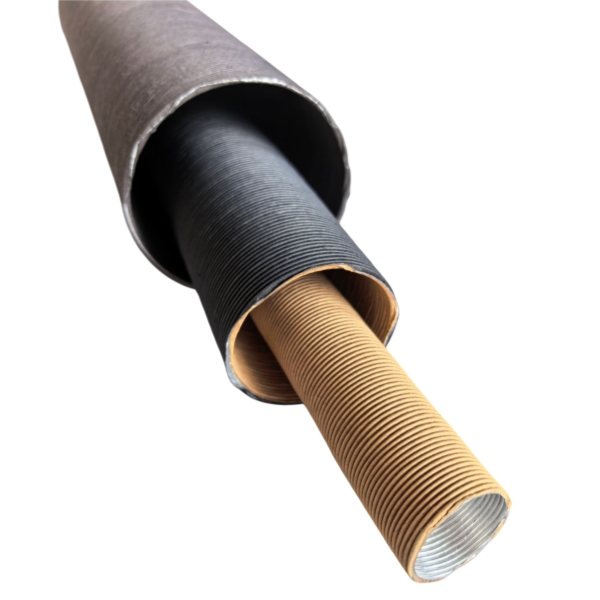
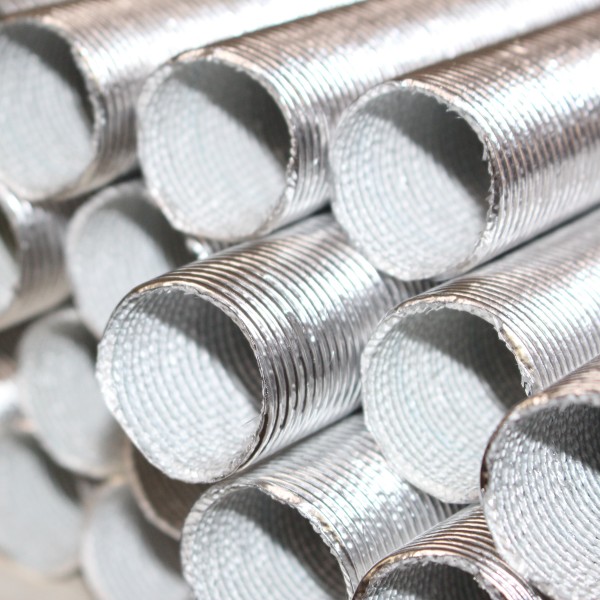
The BSTFLEX APK Hot Air Ducting Pipe uses an aluminum inner layer, paper middle layer and plastic outer layer. Cut-to-order lengths and bulk packaging are available. Select the construction against the application requirements and identify it separately from any insulated PAK sections in the same kit.
State how the supplied length will be measured, including any required connection engagement. Keep that definition consistent between the drawing, sample and purchase order. For packaging and individual piece identification, see the cut-to-length heater ducting guide.
Before releasing a repeat order, fit the proposed duct pieces to the intended connectors and route them in the assembly. Record any changes to the approved layout. A sample that fits the junction still needs to fit behind the cabinet or trim panel where it will be installed.
Questions About Two-Outlet Heater Ducting
Does a diesel heater Y-piece split the air equally?
Not necessarily. A Y-piece provides two routes, but the flow through each depends on its duct, fittings and vent. Equal nominal diameters alone do not guarantee equal airflow.
Can I connect a 90mm heater outlet to two 60mm ducts?
Only if the heater manufacturer permits that layout and the completed air system meets its requirements. Two 60mm bores have about 88.9% of the area of one 90mm bore; that calculation does not approve the junction or the downstream routes.
Can both warm-air outlets be closable?
Follow the heater's permitted outlet arrangement. If a permanently open route is required, the installation must preserve it. Two fully closable vents do not provide that route, even if users are told to leave one open.
Request Ducting for Your Two-Outlet Layout
Send the heater model, a sketch of the specified layout and a section list for the common run and both branches. Include the required internal diameters, cut lengths, mating connections, insulation needs and quantities per kit.
Contact BSTFLEX for a ducting quotation, or review the warm-air ducting and heat protection tube range to identify the products for your inquiry.