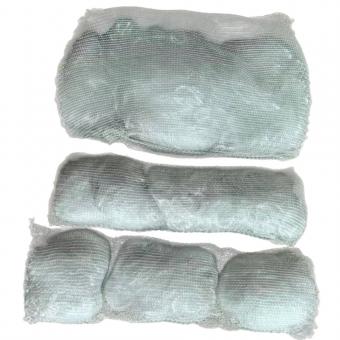
A diesel heater exhaust insulation temperature rating is not the temperature you can expect on the outside of the fitted sleeve. A material may tolerate its specified heat exposure while the finished assembly remains too hot for contact with people, wiring, trim or other temperature-sensitive components.
For heater kit manufacturers, vehicle converters and marine installers, this distinction changes the purchasing question. Instead of asking only how hot the insulation can withstand, ask what temperatures the installed assembly must maintain, where those temperatures will be measured and under which operating conditions.
This guide focuses on interpreting ratings and specifying thermal checks for diesel heater exhaust lagging and insulation sleeves. For the broader selection of slip-on, sewn and coated protection, see the diesel heater exhaust insulation guide.
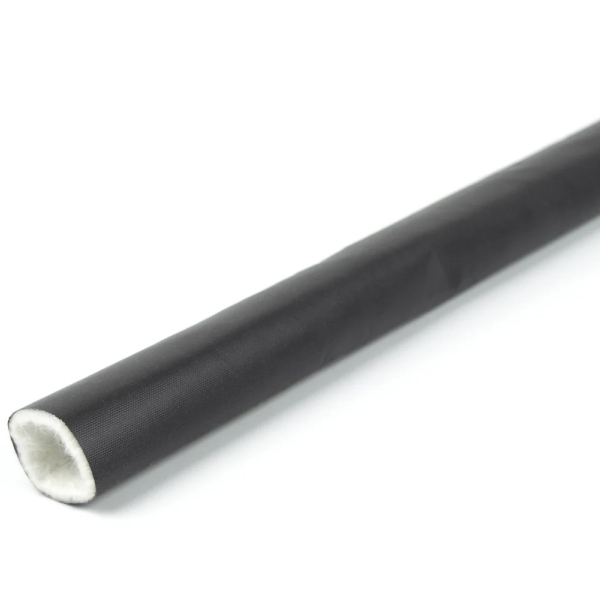
Identify Which Temperature the Specification Describes
An exhaust system has several temperature locations. A number recorded inside the exhaust gas stream cannot be used as though it were the temperature of the pipe wall, insulation surface or adjacent panel. Each location answers a different engineering question.
| Temperature | What it describes | What it helps establish |
|---|---|---|
| Exhaust gas temperature | The gas flowing inside the metal exhaust pipe. | The thermal conditions generated by the heater; it is not a direct measurement of the sleeve exterior. |
| Pipe-wall temperature | The metal surface beneath the insulation at a defined position. | The local exposure experienced by the insulation at the pipe interface. |
| Lagging outer-surface temperature | The exposed outside of the installed sleeve or cover. | The surface condition relevant to contact risk and surrounding heat transfer. |
| Nearby component temperature | A selected location on wiring, trim, a panel or another protected component. | Whether that component remains within its own permitted service conditions. |
| Local ambient temperature | The surrounding air at a documented position, away from direct contact with hot parts. | The environment in which the other readings were obtained. |
Specify the measurement position as well as the temperature. A reading taken beside an exposed metal connection should not be compared with a reading taken at the middle of a fully covered straight section.
Separate Continuous Ratings from Short-Term Exposure
A continuous temperature rating concerns sustained exposure under the stated material specification. A peak or intermittent rating concerns a limited exposure period. Neither should be interpreted without the duration, test conditions and acceptance criteria behind it.
Ask which properties must remain acceptable after heating. Visual integrity, flexibility, dimensional stability and the ability to retain coverage are different requirements. A sample that has not visibly burned has not necessarily demonstrated suitable long-term service performance.
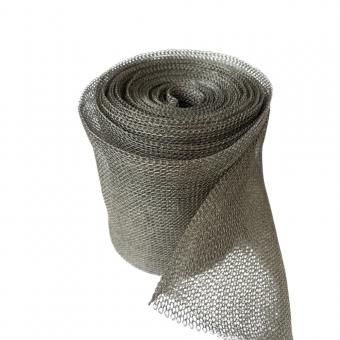
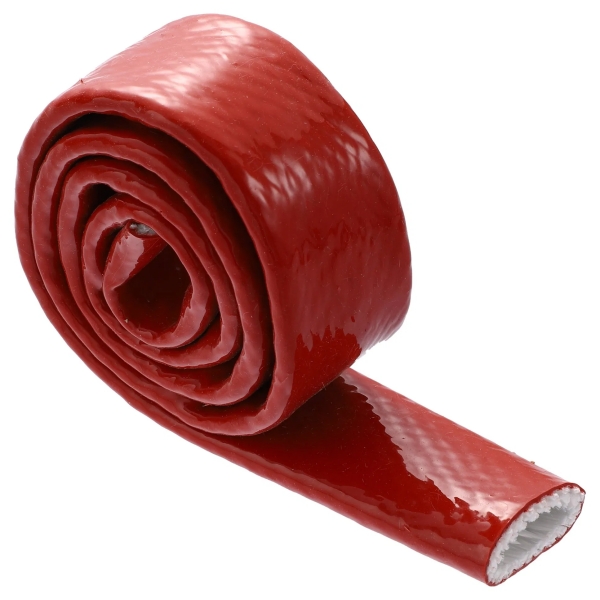
The BSTFLEX Diesel Heater Exhaust Insulation Lagging uses a knitted E-glass fiberglass construction. For a production specification, confirm the selected sleeve grade and its documented exposure limits rather than applying a generic fiberglass temperature value to every finished product.
Where an assembly includes a coating, outer jacket, stitching or retention components, evaluate those materials at their own local temperatures. A rating for the base fiber does not automatically qualify the complete assembly.
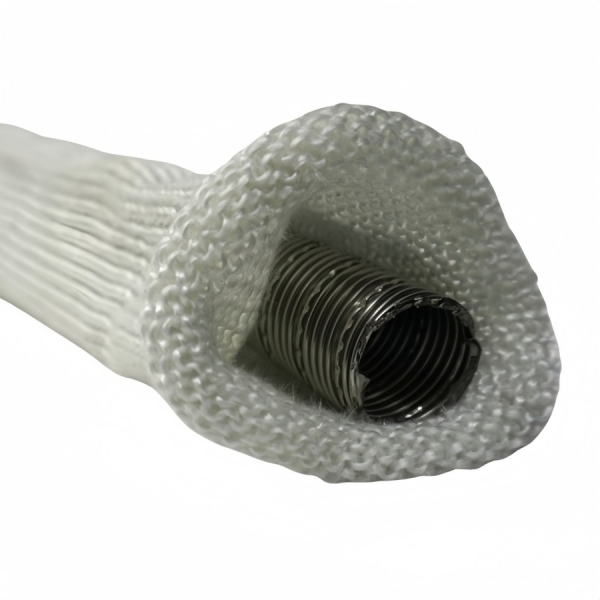
Why the Same Sleeve Can Give Different Surface Temperatures
A material designation does not describe the whole heat-transfer path. Two installations using the same fiberglass exhaust sleeve can differ in heat input, coverage, surrounding airflow and enclosure temperature.
Installed thickness and coverage
Record the sleeve condition after fitting. Stretching, local compression, gaps or bunching can change the thermal path. Nominal wall thickness alone does not describe every position around a bend or support.
Pipe temperature and operating cycle
Compare equivalent heater operating conditions. A reading collected during warm-up should not be presented as though it describes sustained operation or the highest temperature reached during the complete cycle.
Air movement and enclosure condition
An open test bench and a closed equipment compartment have different heat-rejection conditions. Document ventilation and access-panel position without obstructing the heater's required airflow.
Local metal connections
Uncovered fittings, brackets and transitions can create different thermal conditions from the insulated pipe section. Assess the assembled route rather than selecting only the coolest measurement point.
Specify the performance of the installed assembly, not only the temperature resistance of the textile. A useful acceptance record connects the material identity, installation geometry, operating conditions and measured temperatures.
Build the Thermal Check Around the Actual Heater Installation
The following is a proposed framework for an OEM comparison or qualification plan, not a universal test standard. The heater manufacturer and responsible system engineer should approve the operating conditions, sensor arrangement and acceptance limits before testing.
| Test variable | Record or control | Reason |
|---|---|---|
| Heater configuration | Heater model, relevant settings and operating sequence. | Different heat inputs can obscure the effect of the insulation. |
| Exhaust assembly | Pipe material, geometry, connections, supports and covered sections. | The comparison should use an equivalent installation. |
| Insulation sample | Material reference, lot identification, installed coverage and retention method. | The result needs to be traceable to the tested construction. |
| Surroundings | Local ambient temperature, ventilation and enclosure condition. | Changes in the surroundings affect heat transfer. |
| Measurement arrangement | Sensor type, range, attachment method and marked measurement positions. | Results must describe comparable locations and methods. |
| Test duration | Warm-up period, observation interval, agreed stability criterion and shutdown observation where relevant. | A brief snapshot may miss a later temperature maximum. |
| Pass criteria | Project-specific surface and component limits, including measurement uncertainty. | A temperature reading is not a pass/fail decision until the criteria are defined. |
Use qualified personnel and a controlled test setup. Do not operate an installation without required protection simply to obtain a bare-pipe comparison. Where the approved plan permits comparative testing, change one defined variable at a time and keep the other conditions consistent.
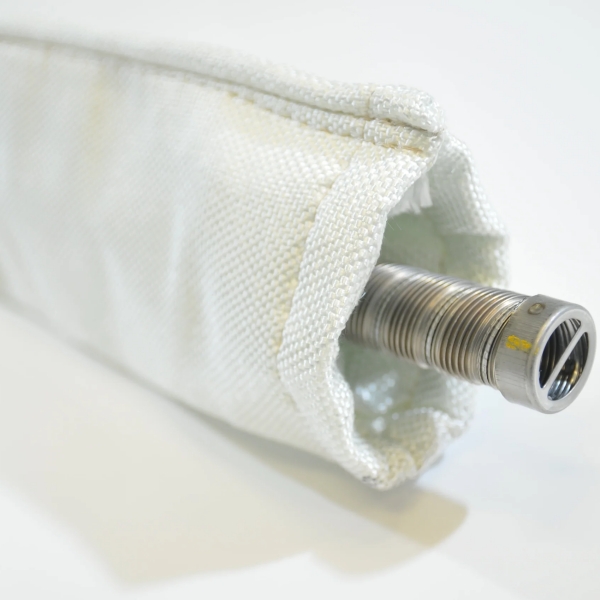
Take Care When Measuring Reflective Metal Surfaces
Infrared thermometers and thermal cameras infer temperature from emitted radiation. Shiny stainless steel and aluminum surfaces can produce misleading readings when emissivity and reflected radiation are not handled correctly. The same instrument setting should not automatically be used for bare metal, fiberglass textile and a coated outer jacket.
For acceptance testing, use a measurement method suitable for the actual surface. This may involve correctly installed contact sensors or an infrared method validated for that surface and temperature range. Record instrument settings, target size and measurement distance where relevant.
Do not put ordinary electrical tape or an unqualified adhesive marker on a hot exhaust pipe merely to create a measurement target. Any surface treatment or attachment material must be rated for its local exposure and must not undermine the installation.
Do Not Convert a Material Rating into a Safe-to-Touch Claim
Insulated equipment can still cause contact burns. Contact risk depends on more than one temperature number: the surface material, duration of contact and expected user interaction also matter. A sleeve remaining intact during a high-temperature exposure does not prove that its exterior is safe to handle.
Where people could touch the exhaust area during use or service, define the contact scenario and any guarding requirement during design. Do not validate a hot surface by touching it. Maintenance access should follow the heater's shutdown and cooling instructions.
The temperature limit of a nearby component is another separate requirement. A cable jacket, plastic connector and interior panel may have different allowable conditions; use the applicable component specifications rather than a single general limit for the entire compartment.
Write an Acceptance Requirement That Can Be Checked
An inquiry such as “high-temperature exhaust sleeve” identifies a product family but does not define a thermal result. A more useful requirement describes both material suitability and the intended operating conditions.
Example specification wording: The exhaust insulation assembly shall be evaluated on the approved heater and exhaust configuration. Record pipe-interface, insulation outer-surface, local ambient and designated adjacent-component temperatures throughout the agreed operating sequence. Maximum measured temperatures shall meet the project-specific limits after accounting for measurement uncertainty. Following the agreed thermal cycles, inspect coverage, retention and physical condition. Record the tested material reference, installation dimensions and any deviation from the approved configuration.
The project must supply the actual limits, cycle count and operating sequence. This wording does not imply that a particular BSTFLEX product has already passed a customer's test or holds a specific installation approval.
Report Temperature Reduction Without Overstating the Result
A statement such as “reduces temperature by 70%” is not meaningful without a defined reference, measurement location and test condition. A percentage calculated directly from Celsius readings is especially unsuitable as a general measure of insulation effectiveness because the Celsius zero point is not an absolute thermal reference.
Prefer a report showing the measured temperatures, the difference between comparable readings, local ambient conditions and test uncertainty. State whether the comparison concerns the outside of the sleeve, a nearby panel or another defined point. Do not present a reduction at one location as a guarantee for all nearby components or all heater operating modes.
Thermal Performance Does Not Replace Clearance or Exhaust Sealing
Follow the heater manufacturer's requirements for exhaust routing, separation, penetrations, supports and discharge. An insulation sleeve does not automatically permit a smaller clearance, contact with fuel lines or wiring, or routing through an otherwise unsuitable space.
The metal exhaust pipe and approved joints contain the combustion gases. Textile lagging is not a gas-tight repair and must not be used to cover a leaking connection instead of correcting it. Joint integrity and thermal protection require separate checks.
For boat installations, assess the specified marine exhaust arrangement rather than treating a sleeve as approval for use below decks. Keep required drainage, inspection access and ventilation provisions functional.
Check the Sleeve Again after Thermal Cycling
As a proposed part of a qualification plan, compare the installation before and after the agreed heating cycles. Look for movement away from the protected section, exposed pipe, thinning at supports, damaged edges or changes that prevent the sleeve from remaining in its intended position.
Record moisture, oil contamination or other service exposure separately from dry thermal testing. A heat-resistance result does not establish weather resistance, resistance to contaminants or service life. Where those conditions matter, include appropriate material evidence and additional evaluation in the project requirements.
Source the Pipe and Lagging as Distinct Components
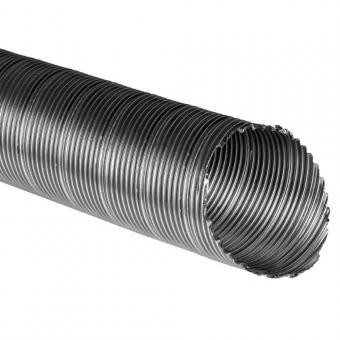
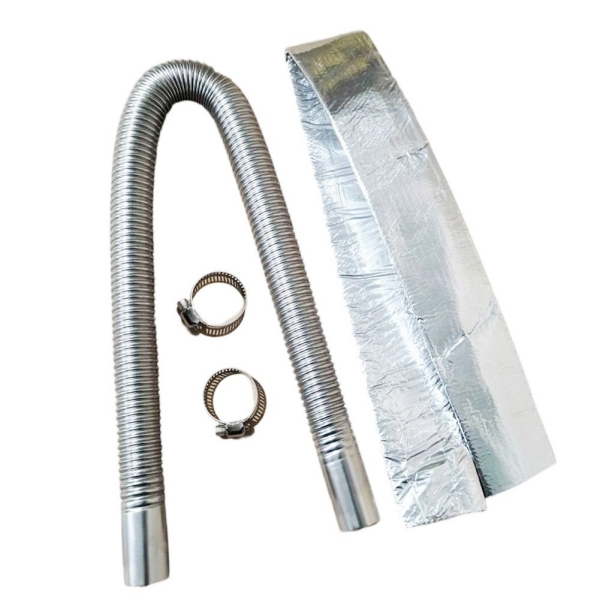
BSTFLEX lists Flexible Stainless Steel Diesel Heater Exhaust Hose for exhaust routing and the separate knitted fiberglass lagging product for external thermal protection. Specify both components so that pipe geometry, sleeve fit and the available installation envelope can be reviewed together.
The wider heat protection tube and warm air ducting range also contains products for other parts of the heater system. Keep the order descriptions separate: cabin warm-air duct insulation and combustion exhaust insulation are not interchangeable merely because both are called heater insulation.
Send the Operating Conditions with Your Exhaust Lagging Inquiry
For a heater exhaust insulation review, provide the heater identification, exhaust pipe outside diameter, covered length, installation photos and available clearance. Add the known pipe temperature or exposure requirement, local ambient range, expected operating cycle and any specified limits for accessible surfaces or nearby components.
For OEM supply, identify the required sample quantity, production quantity, packing format and technical documents needed for approval. Confirm the proposed construction and available evidence before releasing the production specification.
FAQ: Heater Exhaust Insulation Temperature Ratings
Does a high temperature rating mean an exhaust sleeve is safe to touch?
No. A material exposure rating does not state the outer-surface temperature of the installed sleeve. Contact risk must be evaluated for the actual surface, operating conditions and likely contact duration.
How much will diesel heater exhaust lagging lower the surface temperature?
There is no single reduction that applies to every installation. It depends on the pipe temperature, fitted insulation, coverage, surroundings and measurement location. Request results for a representative assembly and stated test conditions.
Can I compare bare metal and insulated pipe with the same infrared thermometer settings?
Not without checking the measurement method. Reflective metal, fiberglass and coated surfaces can have different emissivity characteristics. Use settings or contact measurements validated for the surface being tested.
What should an OEM exhaust insulation test report include?
Include the material reference, heater configuration, installation geometry, operating sequence, ambient conditions, sensor locations, measured temperatures, acceptance limits and post-test inspection findings. State the method and measurement uncertainty.