čo hľadáš?
Basalt loose fill and basalt packing mat put different preparation tasks on the silencer assembly line. With loose fill, the assembler measures and distributes a fiber charge. With a mat, the assembler works from a defined cut piece and positions its edges, layers and overlap. Both routes need an approved material quantity and a clear packing layout.
For repeat production, choose the format around the actual work station: how the chamber is accessed, how many silencer variants are built and which preparation steps should be completed before delivery. A mat is not automatically quieter, and a bag of loose fiber is not automatically the cheaper finished solution.
BSTFLEX offers basalt loose fill exhaust muffler packing, basalt silencer packing in mat and sheet formats, and a separate compressed packing kit. Use the comparison below to specify what should arrive at your factory and what still needs to happen before the silencer is closed.
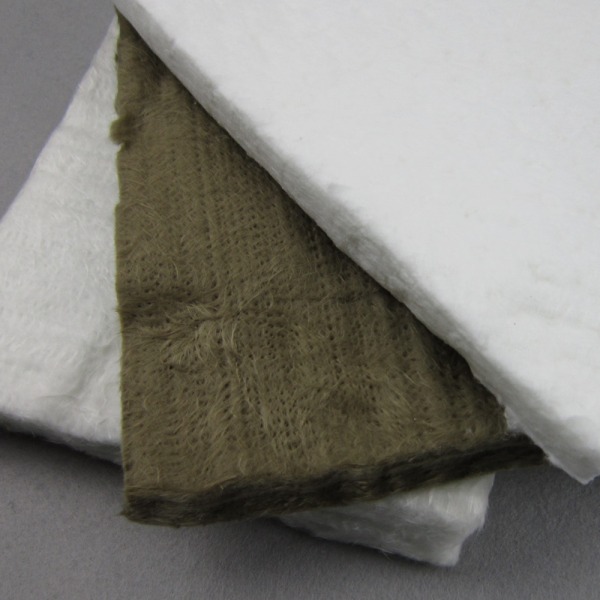
Basalt muffler packing identifies a material direction, not one universal component. Loose fiber, a cut mat and a compressed pillow can all appear in a packing inquiry, but they should occupy separate lines on the purchasing specification.
| Supply Format | Preparation at the Assembly Station | What to Agree Before Ordering |
|---|---|---|
| Basalt loose fill | Measure the charge and place it in the designated packing zones. | Fiber identification, package net weight, dry charge per silencer and filling instructions. |
| Basalt packing mat | Cut or receive a cut piece, then wrap or place it to the approved layout. | Mat construction, usable area, areal weight, thickness and cut-piece requirements. |
| Compressed basalt packing kit | Position the supplied component and complete any specified fitting operations. | Finished dimensions, fiber quantity, containment or compression method and included components. |
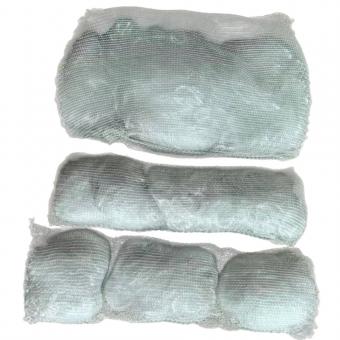
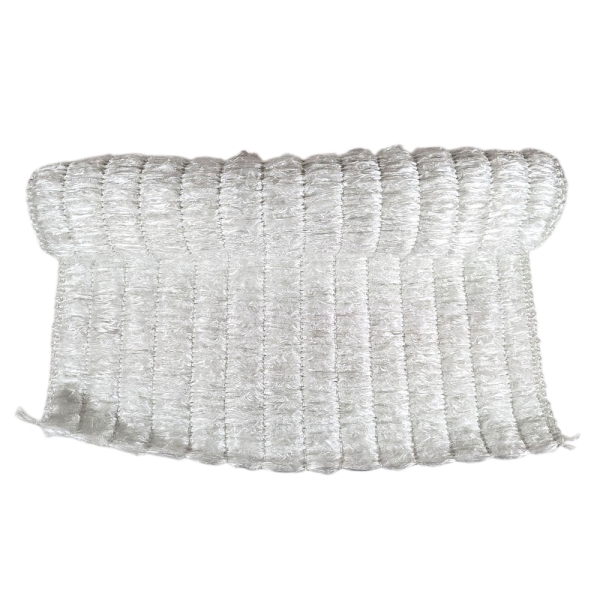
The BSTFLEX basalt muffler packing kit is described as a compressed pillow. It should not be treated as an ordinary flat mat or an unmeasured bag of fiber. Confirm its supplied condition and the preparation required for your particular silencer.
Evaluate basalt loose fill muffler packing when the chamber is accessible for measured filling or when the line already uses a controlled fiber-placement process. For several silencer variants, a shared approved material may be stocked while each part number retains its own filling charge and work instruction.
Begin with the internal cross-section. Mark separate end spaces, pockets and partitions, then state how much material belongs in each zone. A total weight for the whole muffler is not enough when the operator must divide that charge between compartments.
Identify the supplied fiber condition as well. Loose fill does not, by itself, define filament length or confirm that the material can run through existing dispensing equipment. Trial the actual feedstock and tooling together rather than assuming compatibility from another loose-fiber product.
The BSTFLEX loose-fill listing includes 250 g, 500 g and 1000 g packaging options, with packaging customization available for discussion. Confirm the required net content and packaging arrangement in the quotation.
Those weights do not establish how many silencers a package will fill. Use the approved dry fiber charge for each design. A remaining part-bag is still inventory; it should not be pushed into the next muffler simply to empty the package.
For a pre-weighed production requirement, ask whether the requested charge can be supplied in individually identified packs. Specify that quantity independently of the catalog packaging sizes.
Evaluate a basalt muffler packing mat when the same cut pattern can be positioned repeatedly around the core or placed into an open shell. A cutting layout defines the piece before it reaches assembly, but it must still account for seams, overlaps and end clearances.
The BSTFLEX mat-format packing listing offers different thicknesses and custom dimensions. Select the actual construction with the supplier rather than assuming every basalt sheet has the same density, bonding method or flexibility.
Request areal weight as well as nominal thickness. A thick piece does not necessarily contain more fiber than a thinner, denser one. Define how thickness is measured, including whether the specimen is relaxed or under an agreed load.
For a basalt exhaust packing sheet, ask whether it is needled, bonded, stitched or otherwise supported. Basalt mats can be manufactured by different processes. Do not describe a specific product as binder-free or mechanically needled until its construction has been confirmed.
A butt joint and an overlap use different quantities and create different local thicknesses. Show the intended arrangement on the drawing. For multiple layers, identify their positions and joint locations instead of leaving the operator to distribute them by eye.
Trial insertion through the actual shell opening. If the mat catches or folds back, review the pattern and assembly route before trimming material away. An easier closure achieved by removing an unmeasured strip is a change to the packing specification.
For loose fill, the direct quantity is the dry fiber mass delivered into the silencer. For a mat, the material quantity follows from its usable cut area and the stated mass per unit area. Both need to match the approved design, but their purchasing units differ.
Mat-piece mass = usable cut area × stated areal weight.
Use a consistent basis. If areal weight includes a binder, stitching or backing, the result is the mass of that complete sheet, not automatically the mass of basalt fiber alone. Keep a cover, metallic liner or retaining screen separate where the design specifies it separately.
Installed fiber density relates the dry acoustic-fiber charge to its assigned internal volume. It is not the density of a compressed shipping package. Two formats with equal total weight can still distribute fiber differently around the core, so matching the arithmetic is only one part of approval.
There is no need to select loose fill solely because the shell is oval. Equally, a cylindrical shell does not require a mat. The useful distinction is whether the chosen format can be placed consistently into every required region through the available assembly access.
For an offset core, check the narrow gap and the larger pocket independently. For a stepped body, separate the regions on the drawing. Loose fill may be allocated by zone; a mat may require a revised pattern or separate pieces. Confirm the result on a trial assembly rather than assigning one format to the entire geometry category.
Keep all acoustic filling within its designated space. The perforated core bore and other intended gas passages are not areas to fill with wool. Existing core-side protection and retention components remain part of the design unless a revision has been approved.
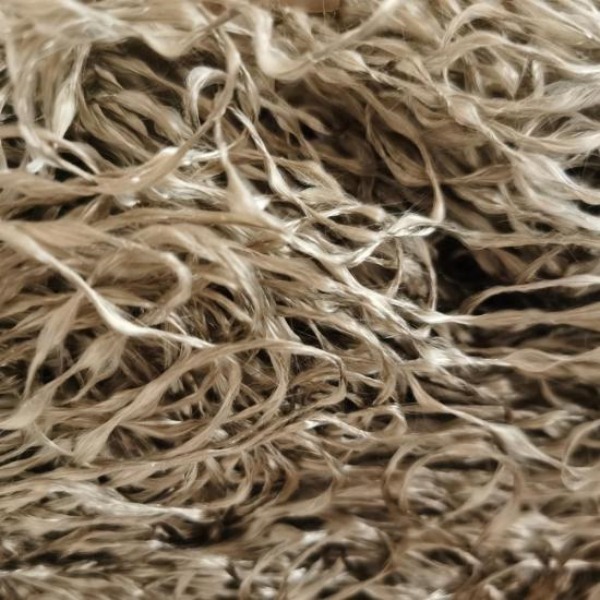
For high temperature basalt exhaust packing, identify the fiber grade and actual service conditions first. Ask which rating applies to the proposed product, whether it concerns sustained or short exposure, and where the temperature is measured.
Changing from loose fiber to a mat does not establish a higher service limit. A different binder, fiber preparation or support layer may also require review. Keep the material data and installation specification linked to the part being approved.
Likewise, a compressed packing kit is not automatically heat-expanding. Do not expect heating to correct a short charge or an unintended gap unless a defined release mechanism is part of the approved construction.
Obtain the technical and safety data for the supplied grade and follow the factory's handling procedures. The terms basalt wool and rock fiber are not substitutes for material identification or handling instructions.
A useful trial starts with the reason for changing supply form: reducing manual weighing, simplifying cutting, accommodating several models or addressing inconsistent placement. Define that objective before ordering samples.
Record the material, dry charge, shell and core geometry, and surrounding layers for each trial. When the proposed mat uses a different fiber construction, identify that difference; the results are then a comparison of two packing designs, not only two packaging formats.
Measure preparation, placement and closure together. Include package opening, cutting, weighing and any corrections needed at the station. For loose fill, observe the filling sequence. For mats, inspect the cut edges, seams and position after insertion.
Evaluate sound under consistent documented conditions and inspect retention after the agreed operating trial. Neither a neat mat nor a visually full chamber establishes the finished exhaust's noise level or service life. Keep the accepted sample configuration with the test record.
For bulk basalt muffler packing, separate the quantity purchased for the lot from the charge installed in each silencer. Additional material may be needed for setup, cutting waste or rejected pieces; that allowance does not belong inside every finished muffler.
For mat supply, compare usable cutting yield rather than total delivered area alone. Agree how offcuts are handled. Do not add scraps to another silencer unless that mixed-piece arrangement is part of its approved specification.
Compare cost per accepted silencer after including material consumption, preparation, assembly, inspection and relevant packaging costs. A loose-fill kilogram price and a mat price per square meter cannot be ranked meaningfully without converting them to the actual approved production requirement.
To compare basalt silencer packing formats, send the same drawing and operating requirements with two requested supply options. State the existing fiber specification and charge, or mark them as development items.
For loose fill, include package net weight, preferred production charge and filling method. For mat supply, include usable dimensions, thickness, areal weight, cut layout and whether cutting is performed at your factory. For a packing kit, list the required contents and finished fit.
Add prototype quantity, expected repeat demand, labeling and packaging requirements. Ask for the actual minimum order, sample lead time and production lead time for each option rather than assuming they are identical.
Drawings and reference samples can be discussed through the BSTFLEX OEM muffler packing manufacturing service. The quotation should identify the material and the work included in the supplied component.
Not in every process. A mat suits a repeatable cutting and placement route, while loose fill can suit a controlled weighing and filling route. Compare their measured production results and the approved silencer performance.
Do not assume that tearing changes only the delivery format. It changes the fiber arrangement and may leave binder or support material in the charge. Use the specified loose-fill product or validate the proposed alternative before production.
Only the confirmed kit contents define what is included. Ask separately about retaining material, fasteners and other service parts. The word kit does not establish their presence or model-specific compatibility.
For material measured and distributed at your factory, review BSTFLEX basalt loose fill muffler packing. For a repeat cutting and wrapping process, review the basalt packing mat and sheet option. For a compressed component, review the basalt fiber muffler packing kit.
Other exhaust silencer insulation wool and packing materials are available when the project calls for a different fiber family. Send the internal dimensions, required material, packing quantity and assembly method so the quotation matches your production route.
Request Basalt Loose Fill and Packing Mat Samples for OEM Evaluation

No.10, Chuangxin North Road, Nanshan Park, Ningguo Economic and Technological Development Zone, Ningguo City, Anhui Province, China
tel/Whatsapp : 0086-15856303740
email : sales@bstbraidedsleeve.com
Skype : vanesa-cheng