čo hľadáš?
A starter motor may work normally when the engine is cold and become much more difficult to operate after the vehicle has been driven, idled in traffic or shut down after a high-temperature run. When the starter is mounted close to an exhaust manifold, header or downpipe, radiant heat can become part of the problem.
A starter heat shield is used to reduce this external thermal exposure. Depending on the installation, the shield may use a reflective aluminized surface, a high-temperature textile construction, or a combination of insulation and reflective layers.
However, not every hot-start problem is caused by heat. A heat shield should be treated as part of the vehicle's thermal management system, not as a substitute for checking the starter motor, solenoid, battery, cables, terminals and grounds.
This guide explains how starter heat soak develops, where a heat shield can help, and how to choose between an aluminized starter shield and a LAVA-style starter heat shield blanket.
Heat soak describes the temperature rise that can continue in components after they have already been exposed to a hot engine and exhaust system. It is particularly important after the vehicle slows down or stops because cooling airflow decreases while the exhaust manifold, headers and nearby metal components remain hot.
A starter mounted close to this hot zone can receive heat by radiation from the exhaust and by convection from hot underhood air. Depending on the vehicle layout, the starter solenoid may also be exposed to the same thermal environment.
The practical symptom is often described as a starter that behaves differently when the vehicle is hot than when it is cold. Possible symptoms can include:
These symptoms do not prove that heat is the only cause. Electrical resistance, poor grounds, undersized or damaged cables, battery condition and starter wear should also be checked. The thermal problem becomes more convincing when the starter is physically located beside a strong exhaust heat source and the starting behavior changes significantly with temperature.
A starter motor heat shield is primarily intended to reduce the amount of external heat reaching the starter and solenoid.
This is different from trying to cool the starter directly. The shield works by interrupting one or more heat-transfer paths between the exhaust system and the electrical component.
For a starter located beside a header or manifold, radiant heat is particularly important. A reflective surface can reduce radiant energy reaching the component when the surface is correctly positioned and remains suitable for the service environment.
A thicker textile-based starter blanket approaches the problem differently. Instead of depending primarily on surface reflectivity, the material construction adds a thermal barrier between the external heat source and the starter assembly.
Because the two constructions work differently, the correct choice depends on the location of the heat source, available clearance, required flexibility, installation method and operating environment.
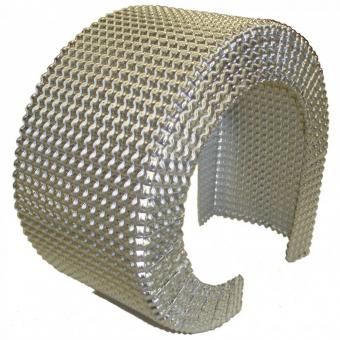
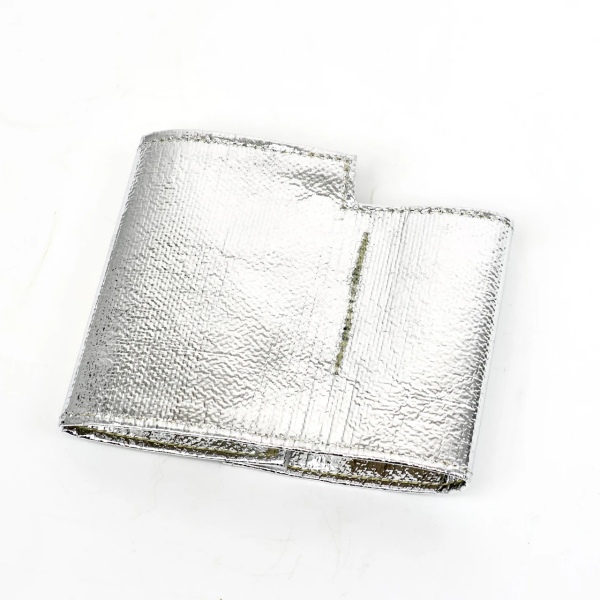
An aluminized starter heat shield is useful where radiant heat from an exhaust manifold, header or nearby exhaust component is the main concern.
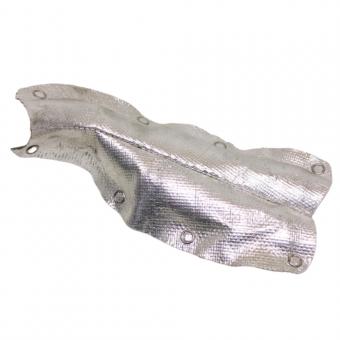
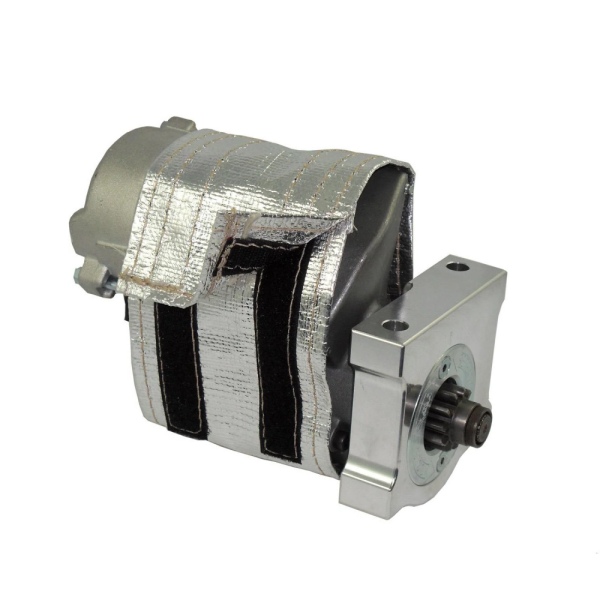
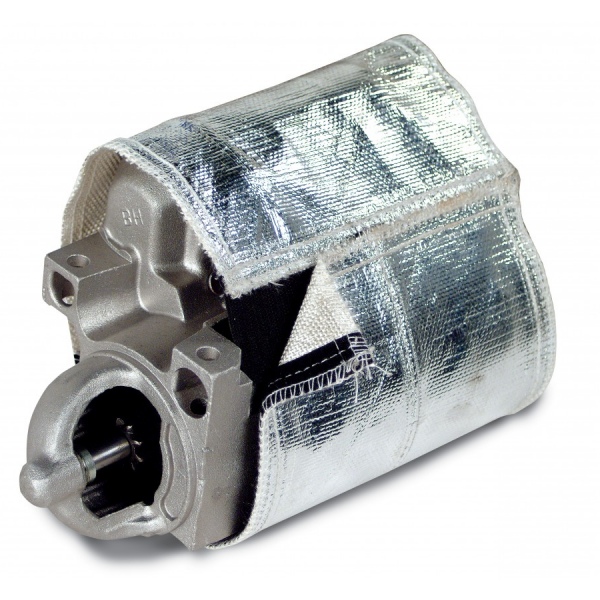
The BSTFLEX Thermal Reflective Aluminized Starter Heat Shield uses an aluminized heat-reflective outer material backed by high-temperature fiberglass insulation.
The reflective surface faces the thermal environment while the fiberglass layer provides additional separation between the heat source and the protected component.
This construction is particularly relevant when:
Aluminized surfaces are most effective as radiant barriers when the reflective face is kept relatively clean and is oriented toward the heat source. The shield should not be selected solely from a headline temperature number. The actual installation distance, airflow, exposure duration and material construction all matter.
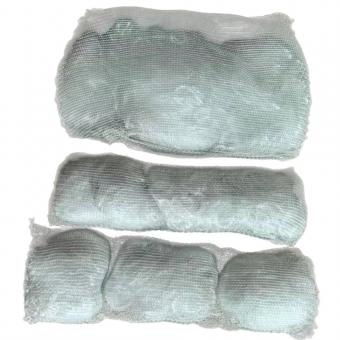
A LAVA-style starter blanket uses a different material approach. The BSTFLEX LAVA Starter Heat Shield Blanket Cover is based on volcanic rock fiber and is designed to protect the starter motor and solenoid from nearby high-temperature components.
This type of starter heat shield blanket is useful when buyers want a flexible high-temperature textile barrier rather than an aluminum-faced reflective construction.
Typical reasons to consider this construction include:
The correct blanket dimensions remain important. A high-temperature material does not compensate for poor fit, interference with electrical terminals, incorrect fastening or contact with moving components.
| Selection Point | Aluminized Starter Heat Shield | LAVA Starter Heat Shield Blanket |
|---|---|---|
| Primary thermal approach | Reflective outer surface plus insulation | High-temperature textile thermal barrier |
| Best suited to | Strong radiant heat exposure | Close-clearance and high-temperature installations |
| Outer surface | Reflective aluminized finish | Volcanic rock fiber textile |
| Flexibility | Flexible wrap-around construction | Flexible blanket construction |
| Typical heat source | Header, manifold, exhaust pipe | Header, manifold, nearby exhaust components |
| Custom sizing | Available for OEM requirements | Available for OEM requirements |
Neither construction should automatically be described as universally better. The material should be matched to the actual thermal geometry.
If radiant energy from a nearby header is the dominant problem and there is enough room for the reflective face to work effectively, an aluminized shield is a logical starting point.
If the starter is packaged in a tight high-temperature zone and a durable flexible textile barrier is preferred, a LAVA starter heat shield blanket may be more appropriate.
Buyers often use the terms starter heat shield, starter heat wrap, starter blanket and starter heat protector interchangeably. They can refer to similar products, but the construction should be confirmed before purchase.
A starter heat wrap generally suggests a flexible product that wraps around the starter housing. A starter heat shield may be flexible or rigid. A starter blanket normally indicates a multilayer or textile-based component that covers a defined section of the starter.
For OEM purchasing, terminology is less important than specifying the construction:
These details give the manufacturer enough information to determine whether an existing size can be used or a custom starter heat shield is required.
A starter shield has to protect the component without creating another service problem.
The starter may include a main battery terminal, solenoid connection, control wire and mounting points. The finished shield should therefore be checked against the actual starter geometry before production.
Do not assume that a rectangular blanket can simply be wrapped around every starter.
Important items to confirm include:
For a custom program, a dimensional drawing, photograph or physical sample can remove considerable uncertainty during development.
A common mistake is to choose a starter heat shield without identifying where the heat is actually coming from.
Consider a starter mounted below an exhaust manifold. If the manifold is the dominant radiant source, the highest exposure may be concentrated on only one side of the starter. A correctly positioned thermal barrier should therefore prioritize that side.
In another vehicle, a large header primary tube may pass very close to the starter solenoid. The local hot spot can then be different from the temperature around the rest of the starter body.
For custom automotive thermal management, the useful information is therefore not simply “starter gets hot.” Buyers should identify:
This approach produces a more useful specification than selecting a material only by maximum temperature.
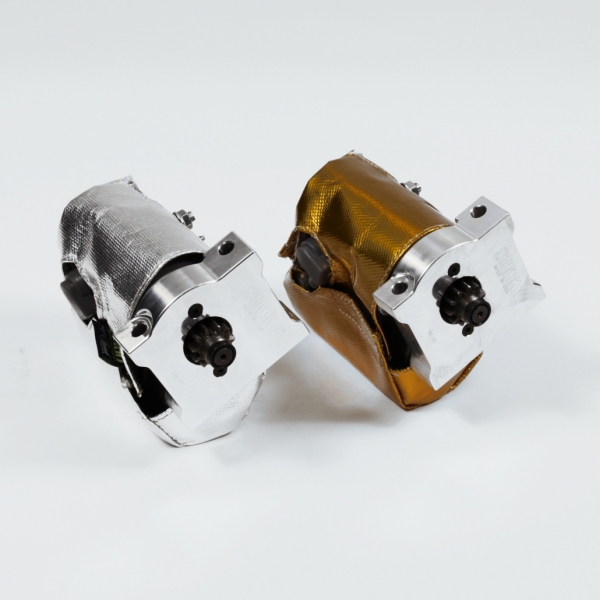
An air gap can improve the performance of many thermal barrier arrangements. When a starter shield is compressed tightly against every surface, the installation may behave differently from one where the shield interrupts radiant heat while allowing the assembly to avoid unnecessary conductive heat transfer.
Real engine bays do not always provide ideal spacing. In some applications the starter is installed very close to a header, which is one reason flexible thermal shields are used.
When clearance is limited, this should be stated in the RFQ. The manufacturer can then evaluate material thickness and construction against the available installation envelope rather than proposing a product that cannot physically fit.
Sometimes the most effective thermal-management system uses more than one component.
If the header or exhaust pipe is producing excessive radiant heat, engineers may consider shielding the heat source, shielding the starter, or combining both approaches.
These methods should not automatically be treated as interchangeable.
A starter shield protects the heat-sensitive component locally. Exhaust insulation or a separate exhaust heat shield addresses the thermal source. The appropriate method depends on the vehicle, surrounding components, required serviceability and exhaust-system requirements.
BSTFLEX supplies multiple automotive component heat shield products for localized thermal-management applications.
A good technical article about starter heat soak should also define the limits of the product.
A starter heat shield cannot repair:
If a vehicle has a hot-start problem, the electrical system should be evaluated as well as the thermal environment.
This distinction is important for both aftermarket users and OEM engineers. Thermal protection works best when it addresses a verified external heat-exposure problem rather than being used to mask an unrelated electrical fault.
For a universal or custom starter motor heat shield, record the basic dimensions before ordering.
Measure the section that the shield will wrap around. Do not assume that starter motors with similar power ratings have identical housings.
Determine how much of the starter motor and solenoid needs thermal protection. Full coverage is not always necessary, but the exposed hot side should be identified.
Mark the battery and control terminals so that the shield does not interfere with electrical connections.
Measure the shortest distance between the starter or solenoid and the nearest exhaust component.
Confirm whether the shield must be installed with the starter already fitted to the vehicle. This can affect the closure and fastening design.
For an OEM, distributor or private-label project, a useful RFQ should contain more than a requested quantity.
| RFQ Item | Information to Provide |
|---|---|
| Application | Vehicle, engine, equipment or starter application |
| Heat source | Header, manifold, downpipe or other source |
| Clearance | Minimum distance between starter and heat source |
| Starter dimensions | Diameter, circumference, length and solenoid position |
| Preferred construction | Aluminized or LAVA/high-temperature textile |
| Closure | Required fastening method |
| Quantity | Prototype quantity and expected production volume |
| Branding | Logo, label, private packaging or neutral packaging |
| Documentation | Required inspection or compliance documents |
When a project requires a non-standard shape, the buyer can also send a drawing or sample through BSTFLEX custom manufacturing capabilities.
Starter heat shields are not limited to retail performance applications. They can also be supplied for automotive thermal-management programs, replacement parts, distributors, private-label brands and equipment manufacturers.
Customization may include:
For repeat production, the approved sample or drawing should define the critical dimensions so later batches can be checked against the same requirement.
Before choosing a starter heat shield, confirm the following:
Answering these questions before ordering reduces the risk of choosing a material that has a suitable temperature rating but does not fit the actual starter installation.
A starter heat shield is used to reduce external heat exposure to the starter motor and solenoid, particularly when they are installed close to exhaust headers, manifolds or other high-temperature components.
It can help when excessive external exhaust heat is contributing to the problem. It will not repair a damaged starter, weak battery, poor ground, faulty cable or other electrical problem.
The term starter heat shield is broad and can describe reflective, textile or rigid constructions. A starter heat shield blanket normally refers to a flexible insulated or high-temperature textile component that wraps around part of the starter assembly.
Not universally. An aluminized construction is particularly useful for managing radiant heat, while a LAVA textile construction can be useful in tight, high-temperature installations. Selection should follow the actual heat source and available space.
That depends on the starter design and the location of the thermal exposure. The solenoid can also be affected by high temperature, but terminals and electrical connections must remain correctly installed and serviceable.
Yes. Dimensions, material construction, fastening, cutouts, labels and packaging can be adapted for OEM and private-label requirements. A drawing or physical sample is useful for non-standard starter designs.
Send the starter dimensions, heat-source location, minimum clearance, required coverage, preferred material, prototype quantity, production quantity and any packaging or documentation requirements.
A starter heat shield is a small component, but its performance depends heavily on the installation around it. The exhaust source, starter position, clearance, airflow and post-shutdown heat soak all affect the final requirement.
BSTFLEX offers both a reflective aluminized starter heat shield and a LAVA starter heat shield blanket, allowing the material construction to be selected according to the thermal environment rather than forcing every application into the same design.
For custom starter motor heat shield projects, send the starter dimensions, photographs or drawing, exhaust clearance, expected operating environment and order quantity. BSTFLEX can review the application and develop a suitable construction for prototype or repeat production.

No.10, Chuangxin North Road, Nanshan Park, Ningguo Economic and Technological Development Zone, Ningguo City, Anhui Province, China
tel/Whatsapp : 0086-15856303740
email : sales@bstbraidedsleeve.com
Skype : vanesa-cheng