čo hľadáš?
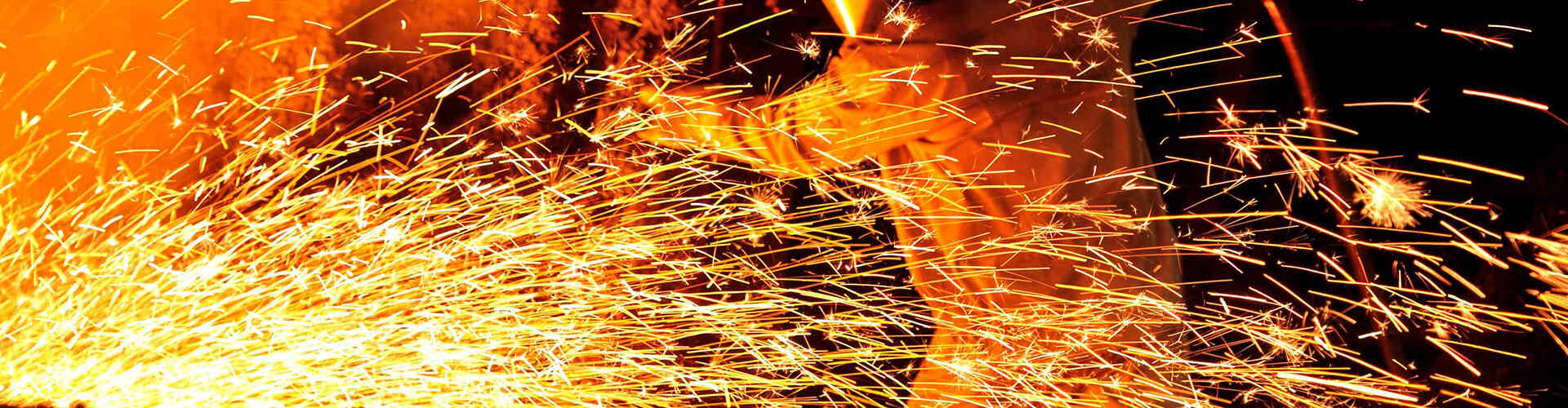
Vo vnútri absorpčného tlmiča výfuku je perforované jadro iba súčasťou akustického systému. Materiál obklopujúci toto jadro má priamy vplyv na hluk výfuku, kvalitu zvuku, tepelnú stabilitu, životnosť tesnenia a dlhodobý stav tlmiča.
Tento materiál je všeobecne známy akotesnenie tlmiča výfuku.
V závislosti od konštrukcie výfuku a trhu môže byť ten istý komponent opísaný aj akotesniaci materiál tlmiča výfuku,tesnenie tlmiča výfuku, tesnenie tlmiča, tesniaci materiál výfuku, akustická výplň, tlmiaca vlna alebo materiál na tlmenie výfuku.
Spoločnosť BSTFLEX dodáva a vyvíja vysokoteplotné tesniace materiály pre tlmiče výfuku motocyklov, výfukové systémy automobilov, pretekárske tlmiče výfuku, priemyselné tlmiče výfuku, generátory a ďalšie výfukové zostavy.
Preskúmajte kompletný sortimenttesniace materiály tlmiča výfuku.
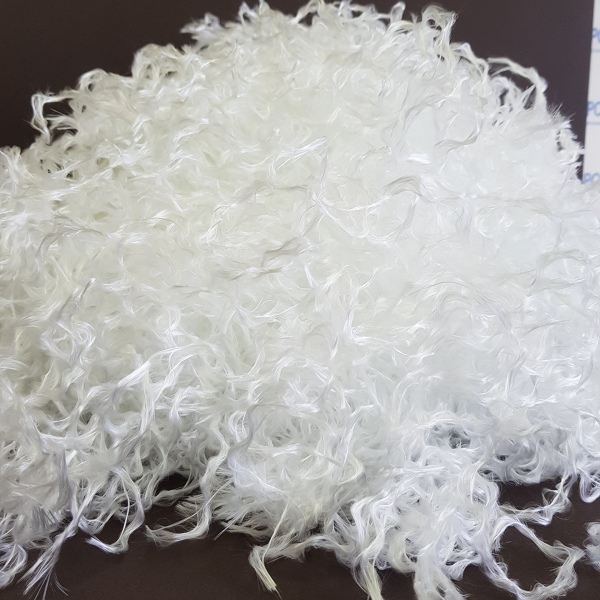
Typický absorpčný tlmič je postavený na relatívne jednoduchom princípe:
Prietok výfukových plynov → perforovaná trubica → ochranná vrstva vlákien → akustické tesnenie → vonkajší plášť
Výfukové plyny prechádzajú perforovaným jadrom. Akustická energia prechádza perforáciami a vstupuje do okolitého vláknitého materiálu.
Namiesto spoliehania sa iba na komory alebo obmedzujúce prepážky, výplň premieňa časť tejto akustickej energie na veľmi malé množstvo tepla prostredníctvom trenia vo vnútri vláknitej štruktúry.
Aby systém mohol naďalej fungovať, musí tesnenie zostať:
tepelne stabilný,
dostatočne odolný,
odolná voči erózii výfukových impulzov,
správne zabalené okolo jadra,
a schopné si zachovať svoju vláknitú štruktúru aj po opakovanom zahrievaní a chladení.
Preto je výber tesniaceho materiálu tlmiča výfuku len na základe teplotnej odolnosti zriedkakedy postačujúci.
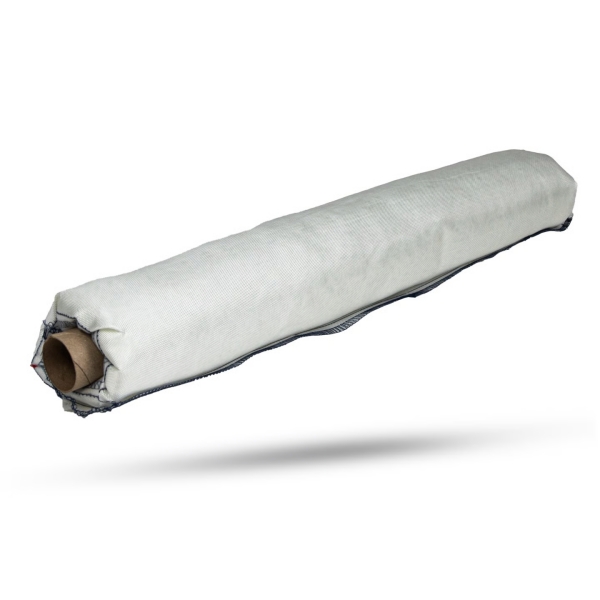
Tesnenie tlmiča výfuku vykonáva niekoľko úloh súčasne.
Otvorená vláknitá štruktúra absorbuje zvukovú energiu generovanú výfukovými impulzmi. To je obzvlášť dôležité pri priamych a výkonných tlmičoch, kde prúd plynu prechádza perforovanou centrálnou trubicou.
Stav tesnenia môže ovplyvniť nielen akustický tlak, ale aj tón výfuku.
Čerstvé upchávky vo všeobecnosti vytvárajú kontrolovanejší a menej kovový zvuk výfuku. Ako sa vlákna opotrebúvajú, stláčajú, migrujú alebo miznú, tlmič sa môže stať citeľne ostrejším a hlasnejším.
Tesniaca vrstva vytvára oddelenie medzi horúcou perforovanou rúrkou a plášťom tlmiča výfuku.
Hoci je tesnenie tlmiča výfuku primárne akustický materiál, jeho tepelné vlastnosti ovplyvňujú teplotu krytu a životnosť susediacich komponentov.
Stabilné tesnenie znižuje priame akustické a tepelné zaťaženie vonkajšieho plášťa. Dobre navrhnutý systém tesnenia môže tiež znížiť opotrebovanie súvisiace s vibráciami vo vnútri tlmiča.
Neexistuje jediný tesniaci materiál tlmiča výfuku, ktorý by bol ideálny pre každý výfukový systém.
Výber materiálu ovplyvňujú teplota, rýchlosť plynu, typ motora, očakávaný servisný interval, cieľová hladina hluku, geometria tlmiča a spôsob výroby.
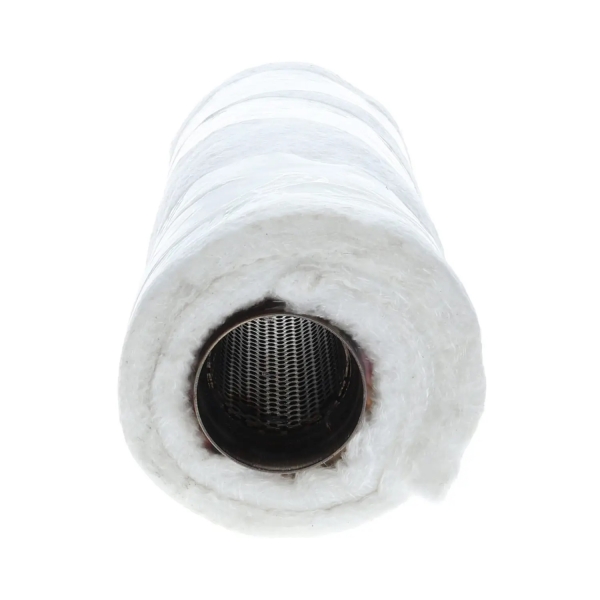
Sklolaminát zostáva jedným z najpoužívanejších materiálov v absorpčných tlmičoch výfuku.
Kombinuje nízku objemovú hustotu s veľkým povrchom vlákien, čo mu poskytuje dobrú akustickú absorpciu bez nadmerného pridania hmotnosti.
Medzi typické formy patria:
voľná priadza zo sklenených vlákien,
sklenené vlákno s kontinuálnym vláknom,
textúrované sklenené vlákno,
rohože zo sklenených vlákien,
vankúše zo sklenených vlákien,
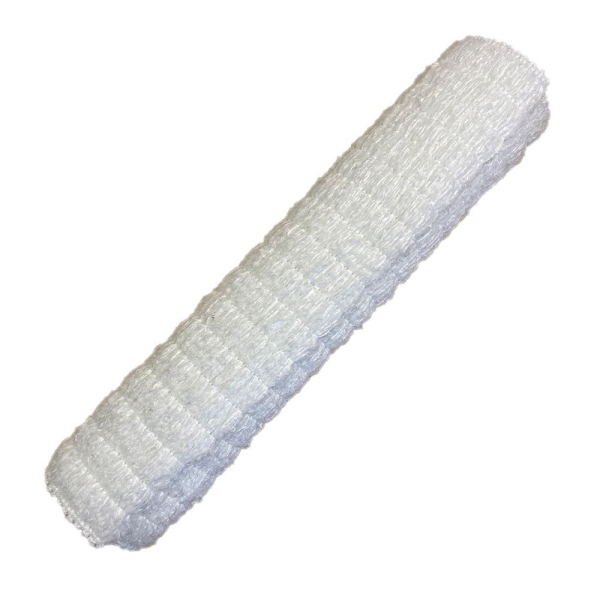
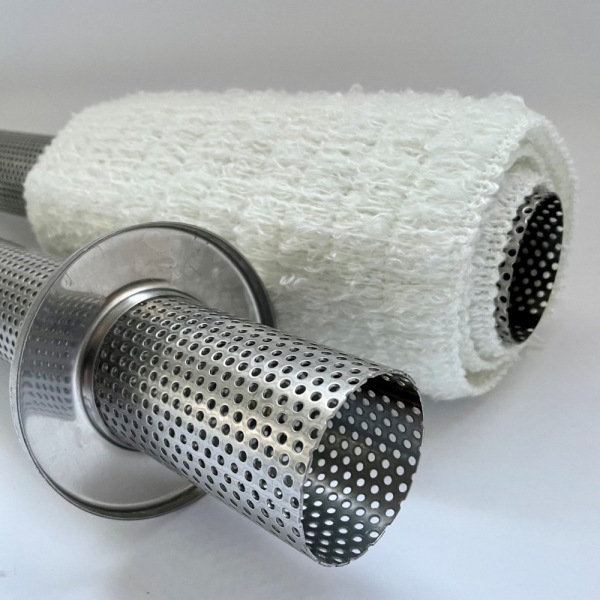
predtvarované baliace ponožky,
a sklolaminát obsiahnutý vo vnútri tkaných vreciek zo sklenenej sieťoviny.
BSTFLEX vyrábaBaliaca ponožka zo sklenených vlákien s tkaným sieťovaným vreckom zo sklenených vlákienpre aplikácie, kde sa uprednostňuje kontrolovaná inštalácia a zadržiavanie vlákien pred voľným balením.
Sklolaminátové balenie sa bežne vyberá pre:
tlmiče výfuku pre motocykle,
Tlmiče výfuku pre štvorkolky a UTV,
výkonné automobilové výfuky,
náhradné tlmiče,
pretekárske výfukové systémy,
a mnoho tlmičov výfuku s absorpčným typom od výrobcu OEM.
Jeho hlavnou výhodou je rovnováha medzi akustickou účinnosťou, hmotnosťou, vyrobiteľnosťou a cenou.
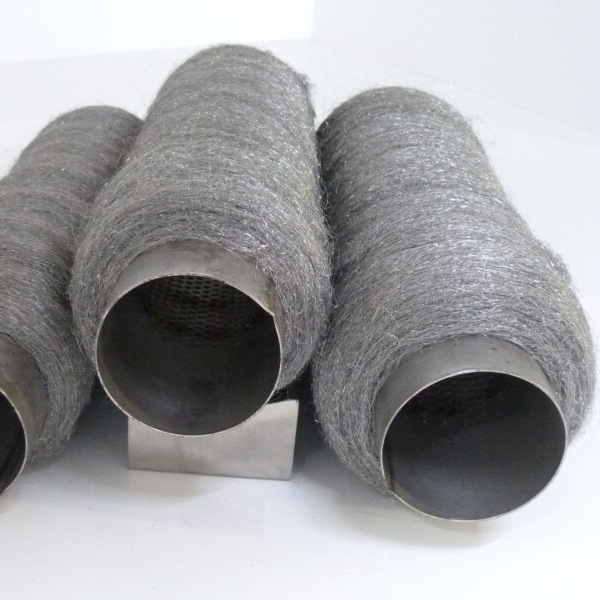
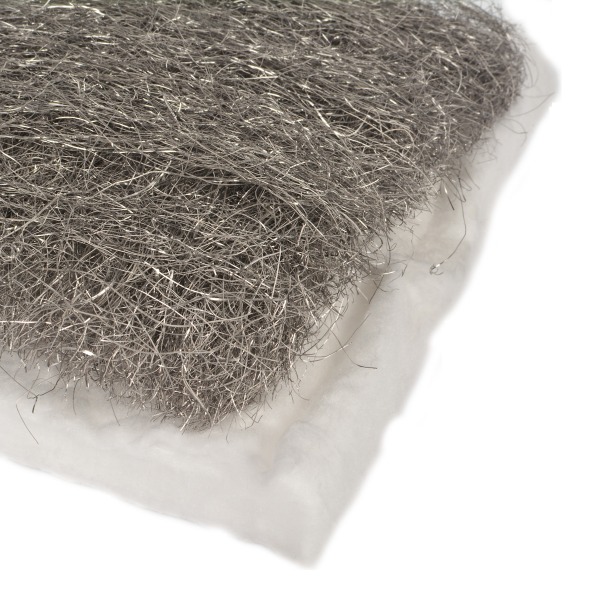
Vlna z nehrdzavejúcej ocele slúži trochu inú funkciu.
Môže sa použiť ako tesniaci materiál, ale v mnohých vysokovýkonných výfukových systémoch sa inštaluje priamo okolo perforovanej trubice ako ochranná vrstva.
Typické usporiadanie sa stáva:
Perforované jadro → nerezová oceľová vlna → sklolaminátové tesnenie → plášť tlmiča výfuku
Vrstva z nehrdzavejúcej ocele pomáha chrániť mäkšie akustické vlákna pred:
veľmi horúce výfukové plyny,
vysokorýchlostné impulzy,
turbulencie okolo perforácií,
vystavenie plameňu,
a progresívne vyfukovanie vlákien.
Táto konštrukcia je obzvlášť užitočná v náročných motocyklových, pretekárskych, preplňovaných a vysokovýkonných výfukových systémoch.
Z tohto dôvodu je porovnávanie sklolaminátu a nerezovej oceľovej vlny, akoby sa dal použiť iba jeden materiál, niekedy zavádzajúce. V mnohých tlmičoch plnia doplnkové funkcie.
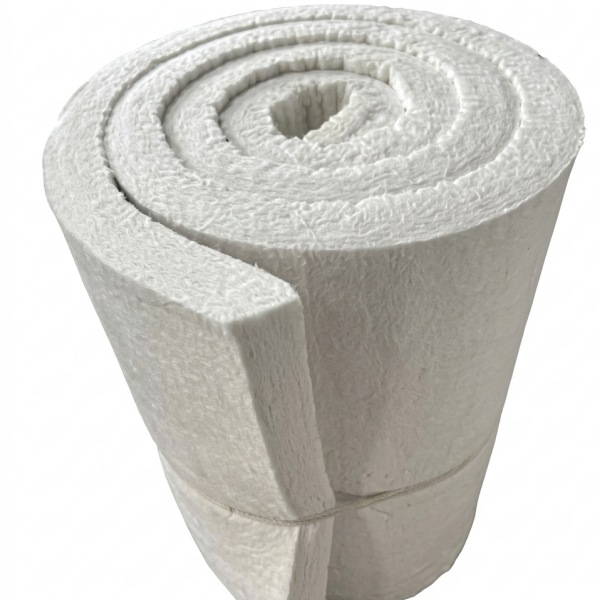
Ak sú teploty výfukových plynov nezvyčajne vysoké, možno zvážiť použitie keramických vlákien.
Keramické vláknité tesnenie tlmiča výfuku je atraktívne vďaka svojej odolnosti voči vysokým teplotám a relatívne nízkej tepelnej vodivosti.
Možné aplikácie zahŕňajú:
high-temperature industrial silencers,
heavy-duty engine exhaust systems,
certain generator exhaust assemblies,
thermal-intensive exhaust equipment,
and special mufflers operating beyond the practical range of conventional glass fiber.
However, the highest temperature material is not automatically the best acoustic material.
Density, fiber diameter, resilience, vibration resistance, handling requirements, and long-term fiber stability must also be evaluated.
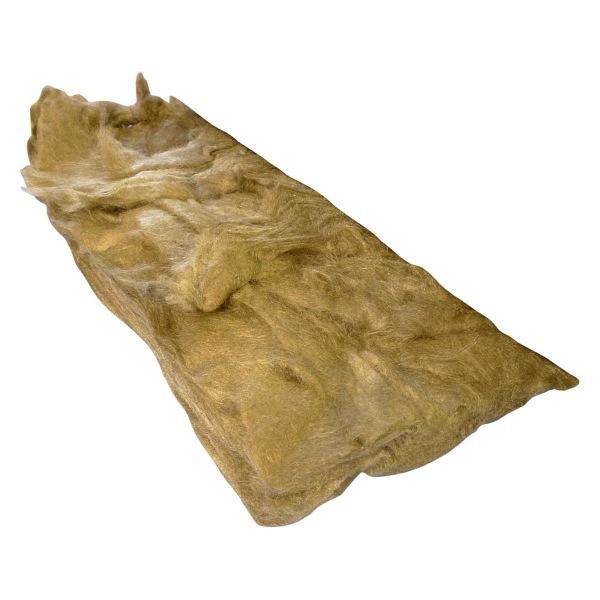
Basalt fiber provides another option between conventional glass fiber and more specialized high-temperature materials.
Produced from volcanic basalt rock, continuous basalt fibers can provide:
good thermal resistance,
mechanical stability,
chemical resistance,
vibration resistance,
and useful acoustic performance.
Basalt muffler packing can therefore be considered for automotive, motorcycle, heavy-duty, or industrial exhaust systems where designers want a mineral-fiber solution with elevated thermal capability.
| Packing Material | Primary Strength | Typical Position | Suitable Applications |
|---|---|---|---|
| Fiberglass | Efficient acoustic absorption | Main packing layer | Motorcycle, automotive, performance exhaust |
| Stainless Steel Wool | Heat and erosion protection | Around perforated core or as metallic packing | Racing, turbo, high gas velocity exhaust |
| Ceramic Fiber | Extreme-temperature capability | Main or supplementary insulation layer | Industrial and severe-temperature silencers |
| Basalt Fiber | Thermal and mechanical durability | Main acoustic packing layer | Heavy-duty, automotive and industrial exhaust |
The correct construction may combine two or more materials rather than using a single fiber throughout the silencer.
Two mufflers using exactly the same fiber can perform differently simply because the material was installed at different densities.
This is one of the most overlooked aspects of exhaust muffler packing.
If the fiber mass is insufficient, several problems can develop:
reduced acoustic absorption,
rapid fiber movement,
localized empty areas,
increased exhaust noise,
accelerated blowout.
The fibers may also redistribute under vibration and exhaust pulsation.
Over-compression creates another set of problems.
When fibrous material is compressed excessively, the void structure needed for acoustic energy dissipation changes.
The result can be:
poorer sound absorption in certain frequency ranges,
increased silencer weight,
difficult assembly,
reduced fiber resilience,
and unnecessary material consumption.
The goal is therefore not to put the maximum possible amount of packing inside the muffler.
The objective is to achieve a controlled and repeatable packing density suitable for the muffler geometry and target acoustic performance.
Muffler packing works in one of the harshest environments on a vehicle.
The material may experience thousands of heating and cooling cycles together with vibration and rapidly fluctuating exhaust pressure.
Several deterioration mechanisms can occur.
High-velocity exhaust gases passing through perforations gradually attack exposed fibers.
This is often called fiber blowout.
Continuous exposure to elevated temperature can reduce fiber resilience and alter the packing structure.
Vibration can cause loose packing to migrate or compact.
The silencer may develop areas with insufficient material even when the total amount of packing originally installed was correct.
Condensation, oil residue, incomplete combustion products, and other deposits can affect the condition of the acoustic fibers.
A theoretically suitable material may still fail prematurely if it is packed unevenly or installed at the wrong density.
Muffler packing deterioration is not always visible from outside the silencer.
Several operating changes can indicate that the material should be inspected.
Common signs include:
A noticeable increase in exhaust volume
The muffler gradually becomes louder because the effective acoustic mass has decreased.
A sharper or metallic exhaust note
When the packing layer becomes thin, sound energy interacts more directly with the metal shell.
Fibers coming from the tailpipe
Visible strands or particles at the outlet may indicate packing migration or blowout.
Hot spots on the muffler casing
Loss or movement of the internal packing can create uneven thermal distribution.
Rattling or internal movement
This can indicate loose material or deterioration of internal components.
Motorcycle silencers place especially high demands on packing material because the available volume is limited while exhaust temperatures and pulse velocity can be high.
For this reason, motorcycle exhaust packing normally needs to combine:
strong acoustic absorption,
low weight,
good thermal stability,
resistance to vibration,
easy repacking,
and controlled fiber retention.
Both two-stroke and four-stroke engines use packed silencers, but their operating environments differ considerably.
Two-stroke exhaust packing can be affected heavily by oil, combustion residue, and frequent repacking cycles.
Four-stroke performance exhausts may expose the material to higher sustained temperatures and aggressive exhaust pulses.
Selecting packing purely by motorcycle type is therefore insufficient. Muffler construction and engine operating conditions should also be considered.
Performance exhaust manufacturers often need to reduce sound without introducing excessive backpressure.
Straight-through absorption mufflers are useful in this situation because the exhaust path remains relatively open.
The acoustic packing surrounding the perforated core becomes a critical component.
Depending on the application, manufacturers may specify:
continuous fiberglass packing,
stainless steel wool core protection,
composite stainless/fiberglass systems,
basalt fiber,
or specialized high-temperature fibers.
For racing exhaust systems, packing retention becomes particularly important because high gas velocities can rapidly damage exposed loose fibers.
Industrial silencers operate under a different set of requirements.
Applications can include:
diesel generators,
gas engines,
compressors,
turbines,
exhaust treatment equipment,
heavy machinery,
power generation systems,
and industrial ventilation or acoustic control systems.
In these installations, designers may prioritize:
continuous operating temperature,
acoustic absorption over a specified frequency range,
long maintenance intervals,
fiber stability,
corrosion resistance,
and repeatable packing density.
Industrial buyers therefore often purchase muffler packing by engineering specification rather than simply selecting a consumer repacking kit.
Manufacturers normally have several ways to introduce fiber into a silencer.
Loose fibers or strands allow considerable flexibility during assembly.
They work well where the muffler geometry varies or packing is performed manually.
The challenge is maintaining consistent density from one muffler to another.
Mats provide more predictable thickness and make material handling easier during production.
They are especially suitable when the silencer has a regular cylindrical geometry.
A measured amount of fiber is enclosed inside a lightweight retaining fabric or mesh.
This allows manufacturers to control fiber mass before installation.
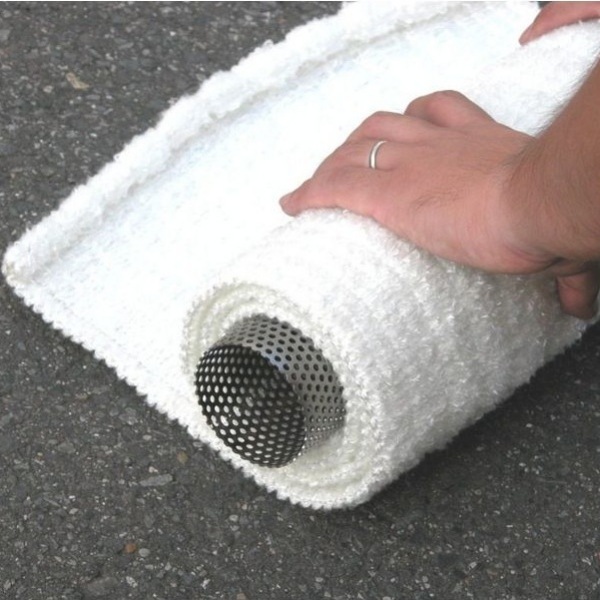
A tubular packing assembly can be fitted around the perforated core, reducing installation time and helping maintain circumferential coverage.
BSTFLEX develops customized packing formats including fiberglass-based assemblies for OEM exhaust production.
A purchase specification should contain more information than simply:
“Fiberglass muffler packing.”
For repeatable production, buyers should consider supplying:
| Specification Item | Why It Matters |
|---|---|
| Fiber material | Determines thermal and mechanical behavior |
| Silencer internal diameter | Defines available packing space |
| Perforated core diameter | Determines required packing thickness |
| Muffler length | Determines fiber quantity |
| Target packing density | Influences acoustic performance |
| Continuous exhaust temperature | Determines material suitability |
| Peak temperature | Identifies short-duration thermal exposure |
| Engine type | Helps evaluate exhaust environment |
| Packing format | Loose fiber, mat, pillow, sock or custom assembly |
| Annual quantity | Determines manufacturing and packaging method |
When these parameters are available, the packing can be engineered around the silencer rather than supplied as a generic bulk fiber.
Manual loose packing creates several variables.
One operator may install more material than another. Distribution around the perforated tube may also vary.
Preformed systems reduce this variability.
A packing sock, bag, pillow, or measured mat can provide:
defined material weight,
more uniform circumferential distribution,
reduced fiber handling,
shorter assembly time,
cleaner production,
improved batch repeatability.
For medium- and high-volume exhaust manufacturing, those manufacturing benefits can be as important as the thermal properties of the fiber itself.
A practical starting point is to identify the dominant failure risk.
Consider fiberglass as the primary acoustic layer.
Consider a stainless steel wool or metallic mesh protection layer before the main fiber packing.
Evaluate ceramic or other elevated-temperature fibers.
Consider materials and packing forms with stronger dimensional stability and controlled retention.
Consider preformed socks, pillows, mats, or custom packing assemblies rather than uncontrolled loose fill.
BSTFLEX manufactures high-temperature thermal and acoustic materials for exhaust systems and can support both replacement packing and OEM silencer production.
Available development options can include:
fiberglass muffler packing,
glass fiber silencer packing,
stainless steel wool packing,
ceramic fiber packing,
basalt-based packing,
loose fiber,
mats,
rolls,
packing bags,
packing pillows,
tubular packing socks,
and customized preformed assemblies.
Sizes, packing weight, fiber combination, retaining construction, and packaging can be developed according to customer drawings, samples, or silencer dimensions.
For applications requiring easier assembly and improved fiber containment, see theFiberglass Muffler Packing Sock with Woven Glass Mesh Bag.
For additional material options, visit theBSTFLEX Muffler Packing category.
There is no universal best material. Fiberglass is widely used because of its acoustic efficiency and weight, stainless steel wool is effective for protecting packing near the perforated core, while ceramic and basalt fibers may be selected where higher temperature capability is required.
Yes. Fiberglass is one of the most common acoustic materials used in absorption-type exhaust silencers because its fibrous structure provides efficient sound absorption while remaining relatively lightweight.
It can be used alone in some designs, but stainless steel wool and fiberglass often perform different functions. Stainless steel wool can protect the inner packing from exhaust erosion, while fiberglass provides the principal acoustic absorption layer.
Packing can escape because of fiber erosion, excessive gas velocity, damaged retaining mesh, incorrect packing density, thermal degradation, or deterioration around the perforated core.
Not necessarily. Excessive compression can reduce the open fiber structure needed for effective acoustic absorption. Packing density should be controlled rather than maximized.
There is no fixed interval for every exhaust system. Replacement frequency depends on exhaust temperature, engine type, riding conditions, packing material, gas velocity, silencer design, and operating hours.
Áno. OEM tesnenie je možné dodať podľa priemeru jadra, priemeru plášťa, dĺžky tlmiča, cieľovej hmotnosti tesnenia, špecifikácie materiálu, teplotných požiadaviek a preferovaného formátu inštalácie.
Viditeľný plášť tlmiča výfuku často získava najväčšiu pozornosť pri návrhu výfuku, ale materiál skrytý medzi týmto plášťom a perforovaným jadrom určuje významnú časť akustického správania tlmiča.
Správne navrhnutétesniaci materiál tlmiča výfukuby nemal jednoducho prežiť teplo.
Musí zachovať správny vzťah medzi štruktúrou vlákien, hustotou, akustickou pohltivosťou, odolnosťou proti erózii a konzistenciou inštalácie.
Pre štandardné tlmiče výfuku motocyklov a automobilov zostáva sklolaminát jednou z najuniverzálnejších možností. Pre náročné výfukové prostredia môže byť použitá vlna z nehrdzavejúcej ocele, keramické vlákno, čadičové vlákno alebo viacvrstvové kombinácie, ktoré môžu predĺžiť životnosť.
Pre výrobcov výfukových systémov OEM nie je ďalším krokom len výber vlákna.
Definuje to správnesystém tesnenia tlmiča výfukupre geometriu tlmiča, teplotu výfukových plynov, akustický cieľ a výrobnú metódu.
Spoločnosť BSTFLEX dokáže vyrábať a prispôsobovať materiály na tesnenie tlmičov výfuku pre motocyklové, automobilové, pretekárske, generátorové, lodné a priemyselné výfukové systémy.
Pre výber materiálu a vývoj vzorky kontaktujte spoločnosť BSTFLEX s rozmermi vášho tlmiča, prevádzkovou teplotou, požadovaným formátom balenia a ročným množstvom.

No.10, Chuangxin North Road, Nanshan Park, Ningguo Economic and Technological Development Zone, Ningguo City, Anhui Province, China
tel/Whatsapp : 0086-15856303740
email : sales@bstbraidedsleeve.com
Skype : vanesa-cheng